homadic v2 review credits: find cheap gas stations & truck stops, verify prices, and review amenities.
a real-world example of a gas price app that ranks stops by what the trip actually saves.
i thought the app was just broken, to be honest.
i was sitting less than a quarter mile from a gas station near work and testing the new homadic v2 review system. i opened the app, searched for gas, and the station basically beside me was not even in the top results.
for a second it sucked, but at this point, getting bugs and issues is the norm. i mean, if a gas station finder couldn't serve the station right next to me, we had a problem.
then i drove past it and saw the price.
regular was $3.79.
homadic's top result was showing $3.17.
that is a 62¢-per-gallon difference.
oh.
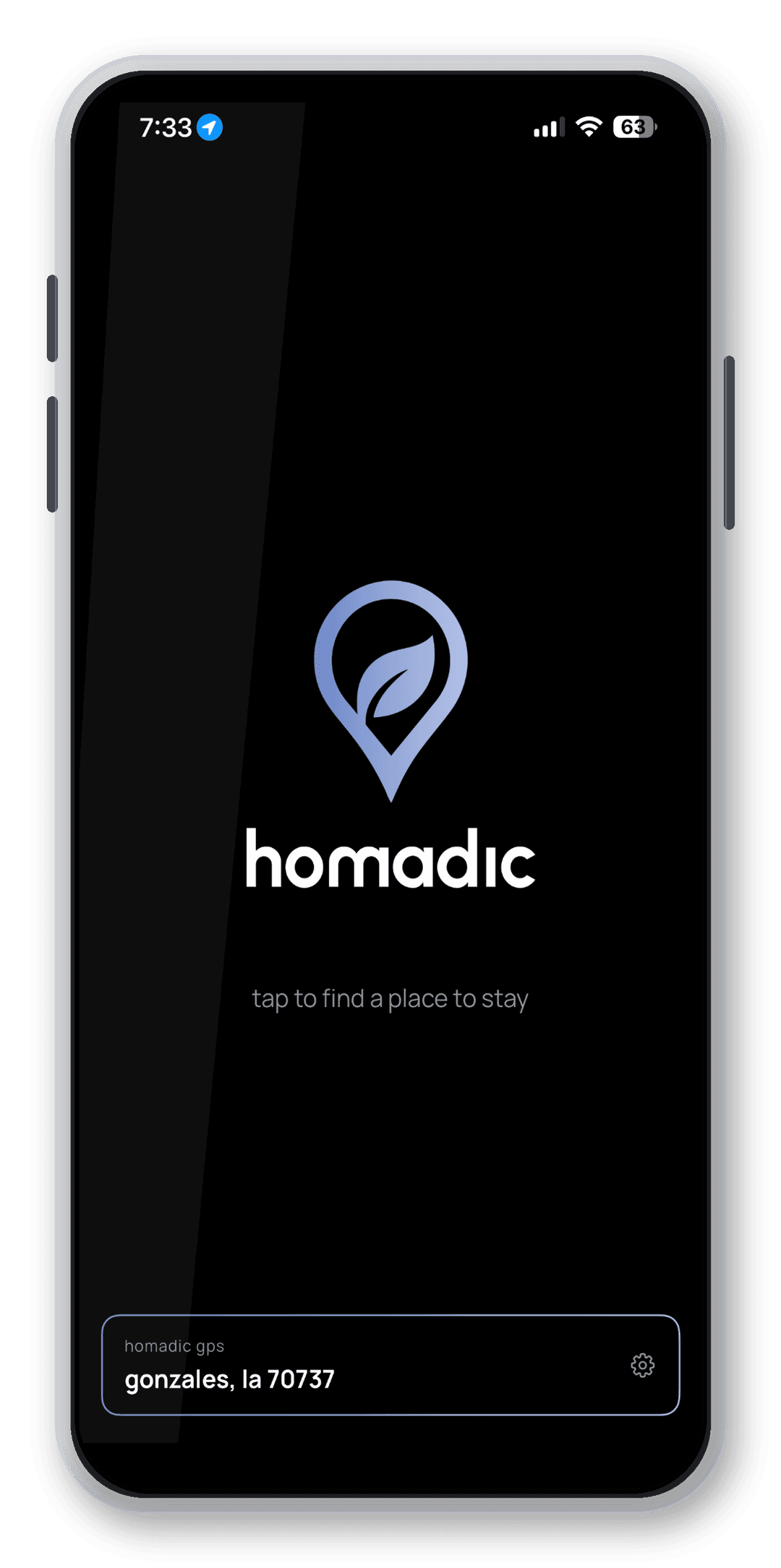
cheap gas is not always a cheaper trip.
most gas price apps are good at answering: where is cheap gas near me? and that's useful. but i think the more important question could be: is that cheaper gas actually worth driving to?
homadic looks at the station price, local baseline, fuel grade, tank size, mpg, actual road distance, detour cost, route time, weather-adjusted efficiency, and the freshness and confidence of the price.
in my test, homadic estimated $10.26 saved on a 16-gallon fill. the nearby station was much closer. and it was also much more expensive.
and look, that's not a savings guarantee. prices move, routes change, and i can't believe i'm saying this, but results may vary. it's simply why getting the options and choices right matters to us.
v2 goes beyond finding gas.
gas is homadic's deepest lane, but roads do not give you one kind of problem. v2 adds five need-first experiences: gas, food, hospitals, hotels, and auto repair or parts.
instead of starting with a giant map full of pins, you start with what you need. gas can rank around fuel economics. food can consider budget, cuisine, distance, ratings, and whether a place is open. hotels can narrow an overnight decision around practical price and distance. hospital search helps locate nearby care options, but does not replace medical advice or emergency services.
gas in two taps.
the gas experience is intentionally simple: tap gas. pick the result that makes sense. route. homadic handles the math underneath, including regular, midgrade, premium, diesel, truck and RV context, and real road distance instead of a straight line through buildings.
a gas station is more than gas, and we all know it.
prices get stale. amenities change. bathrooms close. air compressors break. parking lots get renovated. some stations completely neglect comfort for women and men alike. a station that was useful six months ago might be a bad stop today.
so homadic reviews focus on useful facts:
- is there a usable bathroom?
- does the air compressor work?
- is it well lit at night?
- can a truck or RV realistically get in?
- is there food, coffee, water, parking, or a car wash?
- are feminine products sold?
- is there a baby changing station in the men's restroom?
our reviews are worth leaving.
the verified review begins with a simple picture of the price on the physical pump, inside homadic. the app can read a pump display or station sign using on-device vision and OCR, lets you manually confirm the digits, gets a fresh location fix, and binds the station, capture, timestamp, image hash, and evidence together.
the server checks image identity, duplicates, freshness, proximity, plausible pricing, and device-backed assertions before a contribution settles. that does not magically guarantee physical truth. it means a verified price requires more evidence than somebody typing $3.17.
what are review credits?
review credits replaced ordinary “points” because the name should describe what they represent: a record of contributing really useful information for other people.
- price picture accepted: +5 review credits
- each accepted station detail: +1 review credit
- duplicate, invalid, or rejected contribution: 0
review credits are currently non-transferable contribution records. they are not money, not cryptocurrency, and do not currently have cash value.
but yeah, we're working on it.
so, the loop is simple.
find a better stop → verify what you found → earn review credits → improve shared station knowledge → make future rankings better.
we do not want someone standing at a pump writing an essay, so we wanted to do reviews a little differently. our version looks more like easy-to-tap buttons and stars, and you choose how much information you give: verified visit, bathroom available, air compressor works, well lit at night. done.
what about GasBuddy and Upside?
both are incredible apps. GasBuddy is strong at fuel-price discovery and community reporting. Upside is built around retailer-funded cash back. homadic attacks the decision from another direction:
- GasBuddy: what prices are nearby?
- Upside: where can I get cash back?
- homadic: after getting there, which stop actually makes sense?
those tools can coexist. if another app gives you cash back, great. homadic still wants to answer whether the trip itself is a good move, and address people's needs and amenity preferences.
if you are comparing tools, read our guides to homadic vs. GasBuddy vs. Upside, finding cheap diesel, and truck-stop finder apps.
for more context, see GasBuddy's price-reporting guide and Upside's explanation of cash back.
your data is valuable. homadic just thinks you are too.
people create useful data constantly, and usually the value disappears upward into whichever platform collected it. homadic is starting somewhere different: recognizing settled contribution work with review credits and building a system with a clear, auditable history.
before data can create value, the network should be able to explain: where did this information come from? why do we trust it? who did the useful work?
homadic v2.
find cheap gas based on actual trip savings, choose the right fuel grade, account for tank size and mpg, use real road distance, find truck- and RV-friendly stops, search for food, hotels, care, and auto help, verify gas prices, contribute useful station details, and earn review credits for accepted work.
the premise remains simple: make searching for the things we need easy and enjoyable. make reviews more about usefulness and relevance. save people money, and share the value in our data.